By Veronica Francia
The Personal Travel Essays class changed how I understand travel journalism and exposed a weakness in how I originally designed my Final Master’s Project on the cultural heritage of São Miguel in the Azores. I assumed that to sound credible, I had to remain distant, objective, and externally focused. I believed that if I collected enough facts and descriptive detail, the story would automatically feel strong. This unit showed me the opposite: in personal essays and memoir-style travel writing, authority grows from disciplined subjectivity: a process in which understanding is formed, tested, and revised.
The concept that struck me most is the structural difference between memoir and personal essay. Memoir centers on the writer’s inner journey, while the personal essay focuses more on the outside world. Both, however, depend on transformation and narrative arc. The “hero’s journey” model (departure, trial, return) also applies to place-based reporting. A story is not driven by where the writer goes, but by how the writer’s perception changes. Experience alone is not yet a story; reflection and craft are required to build meaning on the page.
This forced me to rethink my original FMP plan. My topic, the cultural heritage of São Miguel, began as a catalog of elements: festivals, vineyards, devotional traditions, geothermal practices, and architecture. Informative, but generic. From the early course units, I learned that subject alone is not enough: travel writing requires a clear angle, a focused lens that determines what belongs in the story and what does not. The personal essay approach pushes this further by adding stakes: where do I encounter friction? Where are my assumptions wrong? Where does the place resist my interpretive framework?
The Anatomy of a Story unit reinforced that even reflective travel writing needs structure: a strong lede, a nut graph, scenes, context, and a coherent narrative spine. Personal voice does not replace structure; it strengthens it. Scenes combined with interpretation and context produce both readability and authority. This gives me a concrete model for shaping my São Miguel piece beyond impressionistic notes.
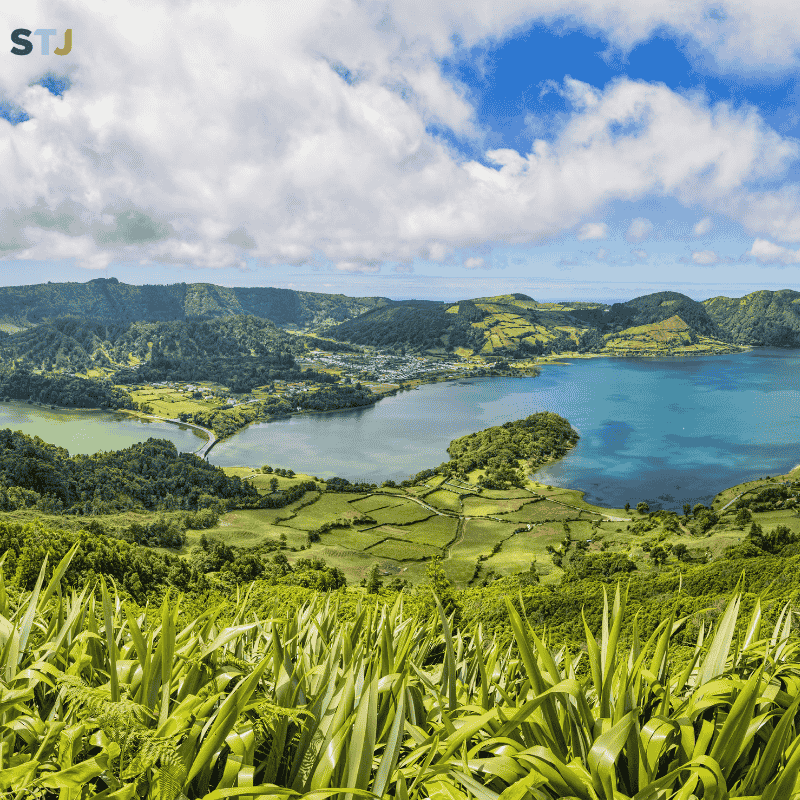
São Miguel makes this approach especially productive. It is a volcanic island where instability is part of identity. Heritage is not only preserved there; it is constantly negotiated with geological risk and environmental change. Through the personal essay lens, this becomes narrative tension rather than background information. My reporting question shifts from “What traditions exist here?” to “How do communities build continuity on unstable ground?” That is a true angle, not just a topic, and exactly what the Research Process unit identifies as necessary before fieldwork begins.
The research unit also emphasized deep preparation and angle-driven investigation instead of passive discovery. Strong stories are not accidents; they grow from solid pre-trip research that allows the writer to recognize what truly matters on the ground and to pivot when needed. For my FMP, this means studying both official heritage narratives and contested ones, reconstructed traditions, migration memory, and tourism-shaped identity, so that my personal encounters are analytically grounded.
The Types of Travel Stories unit helped me understand that my project is not a service guide or listicle, but a hybrid between a destination feature and a personal essay. That format requires both a sense of place and an interpretive voice: scenes and sensory detail must support an argument, not replace it. Knowing the format clarifies my narrative and editorial decisions.
Revision theory also changed my execution plan. Editing must be structural: checking angle clarity, flow, scene value, and thematic unity, not just sentence-level polish. “Killing your darlings,” cutting beautiful but unnecessary description, is essential, especially in heritage writing where decorative detail can easily overwhelm purpose.
As a result, my professional role shifts. I am not only documenting São Miguel’s heritage; I am documenting the verifiable process of learning how to interpret it. My misreadings and corrections become part of the evidence. That is not weakness; it is professional growth and narrative transparency.
This article is part of the practical work carried out by students on the Master’s Degree in Travel Journalism at the School of Travel Journalism.