By Veronica Francia
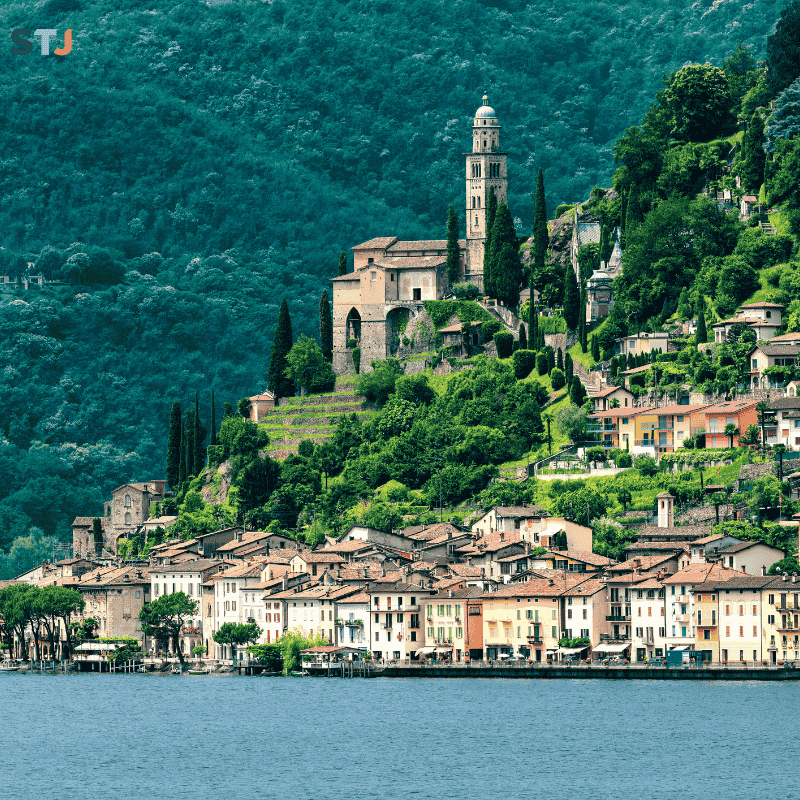
Located south of the Alps, overlooking lakes that evoke the Mediterranean and surrounded by lush green mountains, the Canton of Ticino represents a unique case within Switzerland’s tourism landscape. It is the region where Swiss precision meets Italian language and culture, a place long promoted as the “Mediterranean heart of Switzerland.” But behind this appealing slogan, what is Ticino’s real tourism strategy? Is it sustainable, coherent with local identity, and capable of responding to the contemporary challenges of global tourism?
In light of the concepts discussed during Damià Serrano’s masterclass, Ticino offers a particularly interesting case study for examining the relationship between place marketing, sustainability, local identity, and innovation.
Ticino’s positioning strategy is clear and easily recognizable: a mild climate, unspoiled nature, a high quality of life, and an Italian lifestyle within a Swiss framework. For years, Ticino Turismo has relied on emotional communication, using sun-filled imagery, lakes, palm trees, historic villages, and outdoor activities. This narrative has proven effective in differentiating the region from the rest of Alpine Switzerland, often associated with snow and winter sports.
This identity-building approach reflects one of the core principles of strategic communication: highlighting what makes a destination unique. However, there is a risk of oversimplifying the territory’s complexity, reducing it to a catchy slogan—“the south of Switzerland”—that works well for marketing purposes but does not fully reflect reality. In recent years, Ticino has begun to integrate sustainability more explicitly into its tourism strategy. Efficient public transport, the promotion of slow tourism, the enhancement of lesser-known valleys, and increased attention to environmental protection are now central themes and enjoy growing political recognition.
According to Ticino Turismo, “sustainability is not an option, but a necessity to preserve the territory and secure the future of tourism.” Yet in practice, this remains a critical issue. During the summer months, destinations such as Ascona and Locarno experience overcrowding, placing pressure on infrastructure, housing, and public spaces. This clearly highlights the issue of overtourism, often perceived as a problem exclusive to major cities but equally impactful in regional contexts like Ticino. The challenge is not only to attract visitors, but to de-seasonalize tourism throughout the year, avoiding excessive concentration while promoting a more responsible and conscious form of travel.
Another key concept emerging from the masterclass is purpose-driven travel: traveling not merely to “consume” a place, but to experience it, respect it, and contribute to its well-being. From this perspective, Ticino has significant potential, thanks to its strong cultural identity, local traditions, small-scale producers, and cultural initiatives. In recent years, a growing number of place-based tourism experiences have emerged: food and wine routes, rural tourism in the valleys, and cultural events that tell local stories. These initiatives generate not only economic benefits, but also social value, strengthening the relationship between local communities and visitors.
However, for tourism to be truly purpose-driven, local communities must be involved in decisionmaking processes, not merely used as narrative elements. It is essential to develop a tourism strategy capable of generating shared value. On this front, Ticino still has work to do in fostering deeper integration and building a lasting legacy.
In terms of innovation, Ticino is currently in a transition phase. While advanced digital tools are already in place for tourism promotion and information, the use of artificial intelligence to enhance the visitor experience remains limited. As highlighted by Serrano, AI can become a strategic ally in personalizing travel experiences, managing visitor flows, and improving sustainability. In the Ticino context, this could translate into intelligent booking systems, dynamic suggestions to avoid overcrowded areas, or personalized storytelling tools that present the territory in a more immersive and authentic way. Innovation, however, is not only technological—it is also cultural and organizational. It requires a long-term vision and governance capable of integrating data, territory, and people. On this issue, Ticino Turismo, in collaboration with other cantonal tourism organizations, is currently investing in research and resources to support this transition.
In conclusion, Ticino presents itself as a well-rounded destination, aware of both its strengths and its vulnerabilities. Its tourism strategy shows positive signs: a growing focus on sustainability, a strong territorial identity, and effective communication. At the same time, challenges remain, particularly regarding overtourism, genuine community inclusion, and the full adoption of innovation. As travel journalists, our role is neither to celebrate nor to condemn, but to observe critically. The future of tourism in Ticino will depend on its ability to move beyond promotion and transform travel into a 360-degree experience rooted in respect and responsibility. Only then can Ticino create a meaningful and lasting impact.
This article is part of the practical work carried out by students on the Master’s Degree in Travel Journalism at the School of Travel Journalism.